Author: Ailen

  • Roadside Assistance With Allstate

    If you want added protection against the unexpected, consider adding roadside assistance with Allstate. The Allstate roadside assistance program offers a top-rated service if you break down at affordable prices. 

    Allstate has two roadside assistance programs: Roadside Assist and the Roadside Advantage Program. 

    • Roadside Assist is just $73 for the first year or $6 per month
    • Roadside Advantage Program is $89 for the first year or $7.41 per month

    What Does Allstate Roadside Assistance Cover?

    Allstate Roadside Assistance is a service designed to help drivers who experience unexpected vehicle-related issues while on the road. This program assists with common problems such as flat tires, dead batteries, lockouts, and running out of fuel. The service is available 24/7, 365 days a year, ensuring that help is always just a phone call away.

    Roadside Assistance with Allstate

    Key Features of Allstate Roadside Assistance

    1. 24/7 availability
    2. Nationwide coverage
    3. Towing services
    4. Flat tire changes
    5. Battery jump-starts
    6. Fuel delivery
    7. Lockout services
    8. Winching (pulling your car out of mud, snow, or a ditch)

    Allstate Roadside Assistance Phone Number 

    While Allstate offers various digital tools for managing your account and requesting assistance, sometimes you need to speak with a real person. To reach a live customer service representative at Allstate:

    Call 1-800-ALLSTATE (1-800-255-7828)

    This number is available 24/7 for general customer service inquiries. To reach a live person more quickly:

    1. Call during regular business hours (typically 8 AM to 8 PM local time, Monday through Friday)
    2. Have your policy number ready
    3. Listen carefully to the automated menu options
    4. Choose the option for “speak to a representative” or “other inquiries” if available
    5. If prompted, clearly state that you want to speak with a customer service representative

    Remember that wait times may vary depending on call volume. Use the dedicated roadside assistance number mentioned earlier for urgent roadside assistance needs.

    Allstate Roadside Assistance 24 Hours

    Allstate’s commitment to customer support extends to round-the-clock roadside assistance. Their 24-hour service ensures that help is always available, regardless of when or where you experience car trouble.

    Key points about Allstate’s 24-hour roadside assistance

    1. Always available: 365 days a year, including holidays
    2. Nationwide coverage: Assistance anywhere in the United States and Canada
    3. Multiple service types: From towing to lockout services, all are available 24/7
    4. Quick response times: Allstate aims to get help to you as quickly as possible
    5. Phone and app support: Request help via phone or the Allstate Mobile app at any time

    What Does Allstate Roadside Assistance Cost? 

    The cost of Allstate Roadside Assistance can vary depending on the type of coverage you choose and whether you’re an existing Allstate insurance policyholder. Here are the primary options:

    1. Pay-Per-Use Roadside Assistance: This option is available to anyone, regardless of whether they have an Allstate insurance policy. With pay-per-use, you only pay when you need assistance. Costs typically range from $79 to $119 per service call, depending on the type of service required.
    2. Roadside Advantage Plan: This annual subscription plan is available to Allstate auto insurance policyholders. The cost is typically around $25-$30 per year for the first vehicle, with additional vehicles costing about $15-$20 per year. This plan provides up to three service calls per year.
    3. Towing and Labor Coverage: This is an add-on to your existing Allstate auto insurance policy. The cost varies but is generally around $25-$50 per year, depending on your location and coverage limits.

    How Allstate Roadside Assistance Compares to Other Major Insurers

    To understand how Allstate’s offering stacks up against the competition, let’s compare it to roadside assistance programs from other major insurers:

    Company  Cost Coverage Limit
    State Farm Typically $5-$10 per six months added to your auto policy Similar to Allstate, including towing, fuel delivery, lockout services, and battery jump-starts Up to one hour of labor at the breakdown site
    Progressive   Around $16-$23 per year for the first vehicle Comparable to Allstate, with towing, fuel delivery, lockout services, and battery jump-starts Up to $500 per disablement
    Geico About $14 per year per vehicle Similar services to Allstate Up to one hour of mechanical labor at the breakdown site
    AAA Varies by region, typically $50-$100 per year for basic coverage Comprehensive services, including all that Allstate offers plus additional benefits like travel planning and auto insurance discounts Varies by membership level, but generally includes 3-5 service calls per year

    Comparison Summary

    Allstate’s pricing is competitive with other major insurers, falling in the mid-range of costs. The coverage offered is comparable to most competitors, except for AAA, which provides additional travel-related benefits. Allstate’s advantage lies in its widespread availability and the pay-per-use service option for non-policyholders.

    Roadside Assistance with Allstate Near Me

    Allstate has a vast network of service providers across the United States, ensuring that help is always nearby. When you call for assistance, Allstate will dispatch the nearest available service provider to your location. You can also use the Allstate Mobile app to request roadside assistance, which can use your phone’s GPS to pinpoint your exact location.

    To find Allstate service providers near you before an emergency:

    1. Visit the Allstate website
    2. Use the “Find an Agent” tool
    3. Enter your zip code or city and state
    4. Look for agents that offer roadside assistance services

    Remember, in an emergency, it’s best to call the roadside assistance number directly rather than trying to contact a local agent.

    Manage Your Allstate Roadside Assistance

    Managing your Allstate Roadside Assistance coverage is straightforward and can be done through various channels:

    Method      Details
    Online Account
    • Log in to your Allstate account at allstate.com
    • Navigate to the “Policy” section
    • Select “Roadside Coverage” to view or modify your plan
    Allstate Mobile App
    • Download the app from your device’s app store
    • Log in to your account
    • Access your roadside coverage details
    • Request service or modify your plan
    Phone
    • Call 1-800-ALLSTATE (1-800-255-7828) to speak with a representative who can help you manage your roadside assistance coverage.
    Local Agent
    • Contact your local Allstate agent for personalized assistance in managing your roadside coverage.


    Through these channels, you can do the following:

    • Add or remove vehicles from your plan
    • Upgrade or downgrade your coverage
    • Check your service call history
    • Update payment information

    Cheaper Roadside Assistance Service

    While Allstate doesn’t offer completely free roadside assistance, there are ways to minimize or potentially eliminate out-of-pocket costs for these services:

    1. Towing and Labor Coverage: If you add this to your auto insurance policy, you won’t pay out of pocket for covered roadside services. The cost is included in your insurance premium.
    1. Roadside Advantage Plan: This annual subscription plan allows for multiple service calls per year without additional charges. While not free, it can save money compared to pay-per-use services if you need assistance more than once a year.
    1. New Vehicle Purchase: Some new vehicles come with complimentary roadside assistance for a certain period. If you’ve recently purchased a new car, check if this benefit is included before adding Allstate’s coverage.
    1. Credit Card Benefits: Some credit cards offer roadside assistance as a cardholder benefit. Check your card’s terms to see if this is included before paying for additional coverage.
    1. Promotional Offers: Occasionally, Allstate may offer promotional periods of free roadside assistance to new or existing customers. Keep an eye out for these offers.

    Remember, while these options can help reduce or eliminate per-use costs, they all involve some form of payment, whether through premiums, subscriptions, or as part of other purchases.

    The Final Word On Roadside Assistance With Allstate 

    Allstate Roadside Assistance offers a comprehensive suite of services designed to provide peace of mind to drivers. With options ranging from pay-per-use to annual subscriptions, there’s likely a plan that fits your needs and budget. The 24/7 availability, nationwide coverage, and integration with modern technology like mobile apps make it a strong contender in the roadside assistance market.

    When compared to other major insurers, Allstate’s offering is competitive in terms of both pricing and services provided. The ability to add roadside assistance to an existing Allstate auto policy can also simplify your insurance management and potentially lead to bundling discounts. Get a free auto insurance quote that includes roadside assistance. To get started, enter your zip code and fill out a five-minute application. Save more today on low-cost auto insurance. 

  • Cheapest Car Insurance in South Dakota

    The cheapest car insurance quotes in South Dakota can often be found online with direct insurers like Progressive and Esurance but they’re not always the cheapest. Kemper has the cheapest auto insurance rates in South Dakota, with rates averaging $1,051 a month, which is below the state average of $1,578 per month.

    Auto insurance rates have spiked in recent years. However, South Dakota is still cheaper than neighboring states like Iowa and North Dakota, which makes it an attractive option for budget-conscious motorists seeking quality coverage at affordable rates.

    Car Insurance Requirements in South Dakota

    In South Dakota, adhering to the state’s car insurance requirements is a legal obligation for all drivers. The state enforces a fault-based insurance system, which means that the party found responsible for causing an accident is financially liable for the resulting damages and injuries.

    The minimum liability coverage mandated by South Dakota law is as follows:

    • Bodily Injury Liability: $25,000 per person and $50,000 per accident
    • Property Damage Liability: $25,000 per accident

    It is crucial to note that while these represent the minimum legal requirements, many financial experts and industry professionals recommend obtaining higher liability limits to ensure adequate protection in the event of a severe accident.

    In addition to liability coverage, South Dakota also requires drivers to carry Uninsured/Underinsured Motorist (UM/UIM) coverage. This type of coverage safeguards drivers and their passengers from financial losses resulting from accidents caused by uninsured or underinsured drivers.

    Cheap Car Insurance in South Dakota

    Optional Coverages: Comprehensive and Collision

    While South Dakota does not mandate comprehensive and collision coverage, these optional coverages are highly recommended, especially for newer or financed vehicles. Comprehensive coverage protects against non-collision-related damages, such as theft, vandalism, or natural disasters, while collision coverage provides financial protection in the event of a collision with another vehicle or object.

    Consequences of Non-Compliance

    Failure to maintain the minimum required car insurance coverage in South Dakota can result in severe penalties, including fines, license suspension, and potential vehicle impoundment. Drivers need to prioritize compliance with the state’s insurance laws to avoid legal repercussions and ensure financial protection in case of an accident.

    Making Informed Coverage Decisions

    By getting a solid grasp of South Dakota’s car insurance requirements and state laws, drivers can make informed decisions and select coverage options that align with their specific needs and budget constraints, while ensuring compliance with legal obligations.

    Cheapest Insurers in South Dakota

      1. Kemper: Kemper has the cheapest average car insurance quotes in South Dakota with rates under $60 a month for liability coverage and about $130 monthly for comprehensive coverage. Kemper has dedicated agents that will help you get insured with the best coverage at the lowest price. With a strong reputation for customer service, cheap rates, and a wide range of coverage options, Kemper is the choice for drivers in South Dakota seeking the cheapest rates.
      2. State Farm: State Farm Insurance is another reputable and cost-effective option for South Dakota drivers. Known for its competitive rates and comprehensive coverage. State Farm offers numerous discounts and flexible payment plans to help customers save even more.
      3. GEICO: GEICO is a major player in the insurance industry and is renowned for its affordable rates. With a user-friendly website and efficient claims process, GEICO provides a convenient and cost-effective insurance experience for South Dakota drivers.
      4. Nationwide: Nationwide is a trusted name in the insurance industry, offering competitive rates and a variety of coverage options. Whether you’re looking for basic liability coverage or more comprehensive protection, Nationwide has a plan to suit your needs and budget.
      5. American Family: American Family Insurance is a regional provider with a strong presence in South Dakota. Known for its personalized service and affordable rates, American Family is an excellent choice for drivers seeking a local touch and competitive pricing.
      6. Progressive: Progressive is a well-established insurance company that offers a range of coverage options and discounts. With a user-friendly website and mobile app, Progressive makes it easy to manage your policy and file claims, while also providing affordable rates for South Dakota drivers.
      7. Travelers: Travelers is a reputable insurance company with a long history of providing quality coverage at affordable prices. With a focus on customer satisfaction and a range of discounts and policy options, Travelers is a solid choice for South Dakota drivers.
      8. Liberty Mutual: Liberty Mutual is a leading provider of car insurance in South Dakota, offering competitive rates and a wide range of coverage options. Whether you’re looking for basic liability coverage or more comprehensive protection, Liberty Mutual has a plan to fit your needs and budget.
      9. Allstate: Allstate is a household name in the insurance industry, known for its exceptional customer service and affordable rates. With a variety of discounts and flexible payment options, Allstate is a great choice for South Dakota drivers looking to save on their car insurance.
      10. Farm Bureau: Farm Bureau is a well-respected insurance provider in South Dakota, offering competitive rates and personalized service. As a member-based organization, Farm Bureau is dedicated to providing quality coverage at affordable prices for its policyholders.

    Cheapest Car Insurance for Teens in South Dakota

    Finding affordable car insurance for teenagers can be a daunting task, as insurers typically view young drivers as high-risk due to their lack of experience on the road. However, there are a few strategies that can help South Dakota parents find the cheapest car insurance for their teen drivers.

    One of the most effective ways to save on teen car insurance is to add your teenager to your existing policy as an additional driver. This approach can be significantly cheaper than purchasing a separate policy for your teen. Insurers such as State Farm, Farmers, and GEICO offer discounts for good students, which can further reduce the cost of insuring your teen driver.

    Another option to consider is enrolling your teenager in a defensive driving course or a driver’s education program. Many insurers offer discounts for teens who have completed these courses, as they demonstrate a commitment to safe driving practices.

    Best Car Insurance for Seniors in South Dakota

    As drivers age, their insurance needs and priorities may change. For seniors in South Dakota, finding an insurer that offers competitive rates and tailored coverage options is crucial.

    Insurers like State Farm, Farmers, and GEICO are known for their affordable rates and discounts for seniors. Many companies offer age-based discounts or reduced rates for retired drivers who drive fewer miles annually.

    Additionally, some insurers provide specialized coverage options for seniors, such as emergency roadside assistance or coverage for medical expenses related to injuries sustained in an accident.

    Cheapest Auto Insurance For Trucks and SUVs in South Dakota

    If you drive a truck or an SUV in South Dakota, your insurance needs may differ from those of a standard passenger vehicle. Truck and SUV owners often require higher liability limits and specialized coverage options to protect their investments.

    Insurers like Farmers, Progressive, and Liberty Mutual offer competitive rates and tailored coverage options for truck and SUV owners in South Dakota. These providers understand the unique needs of these vehicles and offer features such as higher towing and rental car coverage limits, as well as specialized endorsements for off-road or commercial use.

    10 Discounts to Lower Your Car Insurance Costs in South Dakota

    1. Multi-vehicle discount: Insuring multiple vehicles with the same provider can often result in significant savings.
    2. Good driver discount: Maintaining a clean driving record can qualify you for a good driver discount with many insurers.
    3. Low mileage discount: If you drive fewer miles annually, you may be eligible for a low mileage discount.
    4. Defensive driving course discount: Completing a defensive driving course can help you save on your premiums.
    5. Good student discount: Many insurers offer discounts for students who maintain a certain grade point average.
    6. Safety device discount: Installing safety features like anti-lock brakes or anti-theft devices can qualify you for discounts.
    7. Bundling discount: Combining your car insurance with other policies, such as home or life insurance, can lead to significant savings.
    8. Paid-in-full discount: Paying your premiums upfront for the entire policy term can often result in a discount.
    9. Loyalty discount: Staying with the same insurer for an extended period can qualify you for a loyalty or renewal discount.
    10. Telematics discount: Some insurers offer discounts for enrolling in telematics programs that track your driving habits and reward safe driving.

    10 Tips to Save Money on Car Insurance in South Dakota

    1. Shop around and compare rates: Don’t settle for the first quote you receive. Compare rates from multiple insurers to find the best deal.
    2. Increase your deductible: Raising your deductible can significantly lower your premiums, but make sure you have enough savings to cover the higher out-of-pocket cost in case of an accident.
    3. Drop unnecessary coverage: If you have an older vehicle, consider dropping collision and comprehensive coverage to save on premiums.
    4. Maintain a good credit score: Many insurers consider credit scores when determining rates, so maintaining a good credit history can help you save.
    5. Take advantage of discounts: Be sure to ask about and take advantage of all available discounts, such as multi-vehicle, good driver, and safety device discounts.
    6. Consider usage-based insurance: Some insurers offer usage-based insurance programs that track your driving habits and reward safe driving with lower rates.
    7. Optimize your coverage: Review your coverage regularly and adjust it to match your current needs and budget.
    8. Improve your driving record: Maintain a clean driving record by following traffic laws and avoiding accidents and traffic violations.
    9. Consider raising your deductible for comprehensive coverage: If you live in an area with a low risk of vandalism or theft, you may be able to raise your comprehensive deductible to save money.
    10. Bundle your policies: Many insurers offer discounts for bundling multiple policies, such as auto and home insurance, with the same provider.

    The Final Word On Getting The Cheapest Car Insurance in South Dakota

    If you compare quotes from several insurers and get all the discounts you can, then it’s possible to secure the cheapest car insurance in South Dakota and save some serious money.

    To get started enter your zip code and fill out a free online quote. It only takes about five minutes and you can save hundreds by shopping direct. Compare quotes and save more money today on the auto insurance coverage you need.

  • Car Insurance Online No Down Payment

    Hey, if you’re looking for quick coverage but your budget is tight, you might want to check out car insurance online no down payment options. We all know how tough it can be to afford auto insurance when money’s really tight. Luckily, some insurers offer plans where you can get started with practically no upfront costs, getting you back on the road without breaking the bank.

    Save Today with Car Insurance Online with no down payment

    What is No Down Payment Car Insurance?

    Ever heard of “no down payment” car insurance? It’s also called “no deposit” or “zero down” insurance, and it’s exactly what it sounds like. This means auto insurance that doesn’t require an upfront payment when you start or renew your policy. Instead of coughing up a big amount at the beginning, you can split your premium into manageable monthly payments that better fit your budget.

    Here’s how it works: these policies skip the initial deposit that most insurance plans ask for, and instead, they spread the remaining premium over several months. This setup makes it a lot easier on your wallet.

    Typically, you’ll still make a very small initial payment to sign the contract and kick off your coverage, but this cost is kept super low to help you manage your budget better in the short term.

    So, instead of a hefty $1,200 payment upfront for the year, you might start with something like $50 the first month, followed by $105 for the next twelve months. This way, you can spread out the financial impact, making it possible for more folks to keep their auto insurance up and running without stress.

    Pros of Car Insurance Online No Down Payment 

    There are several key benefits to choosing a no down payment car insurance policy. Below we are going to analyze some of them.

    Increased Affordability and Payment Flexibility

    The biggest perk here is definitely the affordability and flexibility these plans offer. By spreading your premium payments over time instead of dropping one big lump sum, car insurance becomes way more manageable, especially if you’re tight on cash. This setup lets you handle smaller monthly payments rather than scrambling to come up with a large amount once a year. It helps keep your coverage continuous without the risk of lapses due to missed big payments, effectively reducing the stress of financial strain and helping to prevent gaps in your coverage.

    Greater Access to Available Credit

    Going for a no down payment option means you don’t have to lock up a big chunk of your money right off the bat. This frees up your credit, so you can use it for other essential expenses—think auto repairs, medical bills, or even a bit of fun money. When you don’t have to use a large portion of your credit for an upfront insurance payment, it’s easier to bounce back financially. Smaller, more spread-out premium payments don’t dig as deep into your wallet, giving you more leeway to handle other costs without straining your finances. For someone watching every dollar, having only $50 to $100 tied up at a time, instead of $600 or $1,200, can really make a difference.  

    Reduced Risk of Coverage Lapses

    Paying your premiums in installments can really help dodge those risky lapses in coverage. Normally, if you miss a payment, there’s a chance your insurance could get canceled before your policy is up. In fact, about 15% of car insurance policies across the country are cut short because folks can’t keep up with the payments. But when you break down that big annual cost into smaller monthly bites, it becomes a lot easier to stay on top of things. More drivers find they can keep up with payments without the stress, keeping their insurance active and avoiding the headache of unexpected cancellations.

    Cons of Car Insurance Online No Down Payment 

    While no money down car insurance sounds great, it’s fair to mention a few downsides that you should know about. Let’s check some of them.

    Higher Overall Premium Costs

    The main hitch is that although splitting your payments can ease your budget month-to-month, it tends to hike up your overall yearly costs. When you choose to pay your premium in smaller chunks throughout the year, you might end up paying about 5-15% more annually compared to paying all at once. This price bump comes from the extra fees insurers tack on for handling the more complex billing of installment payments, and the higher risk they bear for potential non-payment over time. In the end, you’re paying a bit of a premium for the convenience of easier monthly payments. It’s a bit of a trade-off—more manageable monthly expenses versus higher total costs. You’ll need to decide what’s more important: keeping your cash flow flexible now, or saving money in the long run.

    Additional Finance and Administrative Fees

    Another thing to keep in mind is that most insurers will add on little finance fees to your bill — think $5 or $10 per month or year — if you choose to pay your premium in installments. These fees help cover the extra admin work it takes to manage multiple payments. Over the course of your policy, these fees can add up to an extra $50 or more on what you’re paying overall. When you’re counting every dollar, these additional charges can really add up, making your insurance more expensive in the long run.

    Potential Coverage Limitations and Restrictions

    Lastly, you should be aware of some coverage limitations that often come with no down payment insurance plans. Because these policies are seen as a bit riskier by insurers, they might put caps on how much they’ll pay out for things like collisions, bodily injuries, or incidents involving uninsured drivers. These caps tend to be lower compared to what you’d get with a policy paid upfront. Also, don’t be surprised if extras like roadside assistance or rental car reimbursement aren’t included. This means if something does happen, you might find your insurance doesn’t cover as much as you hoped, which can really put a dent in the security you feel having insurance is supposed to bring.

    Insurers Offering No Down Payment Car Insurance Online

    These days, many of the big-name insurance companies have rolled out no down payment car insurance plans online, giving you more flexibility alongside their traditional policies that need full payments upfront. Let’s check out some of the top players:

    • Geico: As one of the largest auto insurers in the U.S., Geico offers a “Minimum Policy Down Payment” program. You can start your coverage with an initial payment as low as $50 and then spread the remaining amount over 5 to 7 monthly payments. Thanks to their huge scale and sharp data analytics, they’ve nailed down a pretty reliable pricing model that predicts how likely folks are to complete their installment payments.
    • Progressive: Sitting pretty as the second largest auto insurer in the country, Progressive allows customers to start their policies without any down payment at all. Premiums are then paid in installments using their Flex Pay system. They also have a cool feature called “Name Your Price” that lets you tailor a policy to fit your budget, all thanks to their deep data dive.
    • Allstate: A major name in insurance, Allstate uses a simple digital self-service platform where you can opt for their “Pay in 4” installment plan. This system divides a 6-month premium into four equal payments. You can get started with minimum down payments as low as $100, making it easier to manage your finances over time. Plus, their analytics-driven Clearcover subsidiary specializes in no down payment options.
    • The General: Known for working with high-risk drivers, The General offers an “Easy Pay” no down payment plan. This option comes with affordable monthly payments and flexible terms, perfect for drivers who need non-standard market options after running into trouble.
    • Root & ClearcoverThese two rising stars in the “Insuretech” scene use advanced data science to shake up the traditional insurance market. Both Root and Clearcover offer competitively priced custom car insurance policies with low down payments and spread-out installments. They use sophisticated algorithms to fine-tune premium costs and cash flow logistics, aiming to maximize engagement and keep their business sustainable.

    Car Insurance Online No Down Payment Quotes 

    To illustrate estimated pricing impacts from the trade-offs and variances in policy structures, here are some sample quotes retrieved from leading insurers for a no-down payment policy:

    Type of Driver Insurance Policy Monthly Payment Initial Payment Coverage
    30-year-old
    clean history
    drives a 2015 Toyota Camry
    Geico Minimum Payment Policy $196 per month $50 first installment
    • Bodily Injury 100/300
    • Property Damage 100
    • Uninsured Motorist 100/300
    • Comprehensive $500 Deductible
    30-year-old
    clean history
    drives a 2015 Toyota Camry
    Progressive Flex Pay Policy $219 per month $50 first installment
    • Bodily Injury 100/300
    • Property Damage 100
    • Collision $500 Deductible
    • Comprehensive $500 Deductible
    • Uninsured Motorist 100/300
    52-year-old
    a recent speeding ticket
    drives a 2017 Ford Escape
    Allstate Pay in 4 Policy $258 per month $0 Down Payment
    • Bodily Injury 100/300
    • Property Damage 50
    • Collision $1000 Deductible
    • Comprehensive $1000 Deductible
    • Uninsured Motorist 50/100

    The Final Word on Car Insurance Online No Down Payment   

    Take a moment to really look at your finances and figure out if a no-down payment car insurance policy makes sense for you. Sure, it might cost a bit more overall than paying for a policy in full upfront, but it can be a real game changer if you’re tight on cash.

    It’s a good idea to shop around and compare quotes from several insurers to make sure you’re snagging the best deal. Keep in mind that not all insurers offer cheap no-deposit car insurance, so you’ll want to zero in on those that do. To get started, just punch in your zip code and fill out a quick online form for a free quote. It only takes about five minutes, and you’ll get matched with both regional and national carriers offering competitive rates. You could save a bundle on the coverage you need today with direct rates.

  • Car Insurance Discounts for Nurses

    Did you know there are several car insurance discounts for nurses? Even with rates increasing over 20% in the past couple of years, nurses can get some hefty discounts that can save them some serious money.  

    Nurses provide critical and lifesaving care to patients every day and let’s face it, they deserve discounts on auto insurance.  The good news is that many top auto insurance companies offer substantial discounts to nurses in recognition of their vital services. This article will provide a comprehensive overview of the best car insurance discounts available for nurses, typical coverage amounts, and the safest vehicles to own.  

    Car Insurance Discounts for Nurses

    Nurses Often Pay Less for Car Insurance

    Nurses, doctors, and other medical professionals tend to get some of the best rates on car insurance. There are a few key reasons why car insurance companies offer lower premiums to those working in healthcare.

    More Responsible Drivers

    Insurance companies view those in the medical field as generally being more responsible and safety-conscious. Medical professionals undergo rigorous training and are entrusted with people’s health and well-being. This translates into insurance companies seeing them as less risky drivers. Data shows that nurses and doctors tend to get into fewer accidents and file fewer claims than the general population. This allows insurance providers to offer lower premiums.

    Regular Working Hours

    Most nurses and doctors work fairly regular daytime schedules. They are less likely to be driving late at night or in the early morning hours than shift workers in other industries. Statistics demonstrate that the most dangerous driving times are between midnight and 4 am. So regular working hours during the day can mean better rates. Insurance companies reward this with discounted premiums.

    Good Credit Scores 

    Many medical professionals have excellent credit, especially those who have been working for years after completing their training. Insurance companies look at credit history to determine premiums because research shows a correlation between credit scores and claims risk. Those with higher scores tend to file fewer claims. With good credit, nurses and doctors often pre-qualify for the lowest insurance rates.

    The Best Auto Insurance Discounts For Nurses 

    Occupational Discounts

    Some insurance companies offer specific discounts for healthcare employees. These occupational discounts can shave 5-15% or more off regular rates. The discounts are meant to both attract medical professionals and recognize their contributions. Be sure to inquire about occupational discounts when shopping for car insurance.

    Commuting to Work

    Most insurance providers ask for your commute distance when determining rates. Nurses generally have shorter commute distances than the general population. This helps lower risk and insurance premiums. Shorter commutes mean spending less time on the road exposed to potential accidents. Insurance companies reward this lowered exposure with reduced premiums.

    Group Insurance Discounts 

    Many hospitals and medical facilities offer group insurance plans as an employment benefit. This allows nurses and other staff to enjoy lower group rates. Since the whole medical office participates together, premiums can be reduced by up to 25%. Group plans give several advantages and discounts that individuals shopping alone won’t typically enjoy.

    Legacy Discounts

    There are often several generations of nurses in families. Young nurses entering the field can sometimes get legacy discounts based on their parents also working in the medical profession. These discounts recognize longstanding loyalty across generations.

    Bundling Discounts

    Many nurses take advantage of bundling discounts from their insurance companies. This means purchasing multiple policies, such as home auto and disability insurance together from the same provider. Bundling can result in substantial discounts off regular prices, usually at least 15% lower.

    Ongoing Savings Opportunities

    There are also many ways for nurses to save on car insurance after initially signing up. Maintaining a clean driving record with no accidents, tickets or claims is critical if your are in search for cheap car insurance under $50. Combine this with a good credit history and high liability limits to keep rates optimized over time. Consider a usage-based or telematics program through a provider like Progressive or StateFarm. This uses an app or device in your vehicle to monitor actual miles driven and driving habits. Doing so can potentially save you hundreds per year.  

    Insurers Offering Auto Insurance Discounts For Nurses

    Several insurers offer nurses discounts, with savings of up to 25%. Here are some of the top car insurance discounts for nurses, in order of highest potential savings:

    1. Geico – Up to 25% off certain coverage options through an occupational discount for nurses. One of the largest savings opportunities in the industry. 
    2. State Farm – Up to 15% discounts for nurses, compounding with other discounts like safe driver and defensive driving course completion.
    3. Allstate – Features a “Nurses Saving” discount of up to 10% for RNs or LPNs. Simple eligibility verification.
    4. Farmers – Discounts of up to 10% for nurses and other healthcare practitioners. Mixed with additional discounts.
    5. Progressive – Gives the chance to save about 10% for nurses through occupation discount after verification.
    6. USAA – Up to 15% off for nurse discount if you qualify through family military history. Limited eligibility.

    So companies like Geico, State Farm, and Allstate tend to offer the highest and most widely accessible auto insurance discounts for nurses. The savings can really add up, especially when combined with other available discounts.

    Typical Car Insurance Coverage Amounts for Nurses

    The exact car insurance coverage limits that nurses require depend partially on state laws and individual factors. However, here are some general recommendations on typical coverage amount ranges that balance comprehensive protection with reasonable monthly premiums:

    • Bodily Injury Liability: $100,000 to $250,000 per person; $300,000 to $500,000 per accident
    • Property Damage Liability: $100,000 to $250,000
    • Uninsured/Underinsured Motorist Bodily Injury: $100,000 to $250,000 per person; $300,000 to $500,000 per accident 
    • Collision and Comprehensive: $500 to $1,000 deductible
    • Medical Payments: $5,000 to $10,000 


    You’ll notice liability coverage recommendations are higher than minimums. This protects a nurse’s assets better if an at-fault accident occurs. RN income potential means lawsuits may seek higher rewards. Moderate deductibles on collision and comprehensive coverage keep premiums affordable but don’t sink you with high out-of-pocket costs for an accident or theft claim. Good medical payment coverage handles injuries to you or passengers.

    Always compare quotes, as pricing varies hugely between insurers. Take advantage of the nurse discounts above and ask about additional ways to save, like bundling home/auto policies or pay-as-you-go car insurance programs.

    Safest Vehicles for Nurses

    Nurses often need to drive to see patients or commute to medical facilities in all road conditions. Thus, having a safe and reliable vehicle is crucial. Here are some of the top-rated vehicles in safety tests that also offer excellent injury protection and appeal for nurse duties:

    SUVs & Crossovers

    • Subaru Outback – Top safety picks abound for the Outback. Standard AWD, ample cargo room for medical supplies, smooth ride quality. Optional safety features like pre-collision braking and lane departure warnings further appeal to nurses.
    • Honda CR-V – High crashworthiness ratings, advanced safety systems standard across trims, optional AWD, and intelligent clearance features for slick roads make the CR-V a safe pick for nurses.  

    Sedans

    • Toyota Camry – A consumer favorite for comfort, reliability, and resale value. All Camry trim levels come standard with the Toyota Safety Sense package, including a pre-collision system with pedestrian detection, adaptive cruise control, and auto high-beam assist.  
    • Hyundai Sonata – Extremely safe family sedan with a “Top Safety Pick +” rating from the IIHS. Advanced safety features include standard forward collision avoidance, parking sensors, automatic emergency braking, lane-keep assist, and more. Lots of value appeal.

    Hatchbacks

    • Kia Soul – High visibility, compact size, and boxy interior storage appeal to nurse duties. All trims come standard with advanced driver assistance systems like forward collision warning, lane departure warning, and driver attention monitoring.

    Whether considering safe SUVs, reliable sedans, affordable hatchbacks, or even hybrid models, always compare warranty coverage, crash test results, and standard advanced safety features. This ensures the vehicle will keep nurses as protected as possible on the road.

    Car Insurance Quotes For Nurses

    Now that you see the savings opportunities, coverage recommendations, and safest cars for nurses, the next step is requesting an auto insurance quote. Most insurers featured above provide online quoting tools to quickly compare premium estimates. When filling out the quote form:

    • Select your occupation as a nurse healthcare practitioner
    • Review the recommended policy limits above as guidance
    • Indicate if you qualify for any other discounts (like safe driver or defensive driving course completion)
    • List any safety features your vehicle has (exact trim configurations can impact premium)

    The quote form only takes 2-3 minutes in most cases. Make sure to compare quotes from at least 3 top insurers, as nurse discount availability and pricing vary amongst them. Doing so ensures you find the best coverage, savings, and value tailored to your needs and budget.

    The Final Word On Car Insurance Discounts For Nurses   

    Nurses dedicate their lives to caring for others. In return, top auto insurance companies like Geico and State Farm demonstrate their gratitude through exclusive discounts to nurses. These specific discounts can save nurses hundreds of dollars per year. 

    Capitalize on nurse discounts, purchase ample liability and injury protection, and invest in a safe vehicle.  This multifaceted approach helps nurses gain peace of mind by making insurance and safe transportation one less thing to worry about as they focus on patient care. Get your nurse auto insurance quote today and get discount savings online.  

  • Pay As You Go Auto Insurance

    If you do not drive that much and want cheaper car insurance coverage, then check out pay as you go auto insurance. For drivers who rarely drive, you could potentially save over $1,000 a year. 

    Pay as you go auto insurance (PAYG), also known as usage-based car insurance, is a type of car insurance where drivers pay for the coverage based on how much they drive. Unlike traditional car insurance policies with fixed monthly or annual premiums, PAYG insurance bases premiums on actual vehicle usage, measured by metrics like miles driven.

    PAYG insurance provides flexibility for drivers who do not rack up high miles, like a student of someone who works from home and doesn’t drive much. For motorists who put limited miles on their vehicles annually due to lifestyle factors like working from home, PAYG insurance can yield significant savings compared to conventional coverage. However, for those who log higher mileage for daily commuting or work-related driving, PAYG may end up costing more over time.

    In recent years, even top providers like Allstate have entered the pay as you drive auto insurance market. As auto insurance rates have skyrocketed, more people are choosing PAYG insurance as a way to maintain legal coverage, while reducing the cost of insuring their automobile by a lot. 

    Pay as you go auto insurance

    Top Five Pay As You Go Auto Insurance Companies

    1. Metromile

    Metromile pioneered the PAYG insurance model. The company captures mileage data directly from a vehicle’s onboard diagnostics (OBD-II) port. Then, it bases insurance rates on a base rate plus a per-mile rate. Customers only pay for the precise mileage they drive without overpaying for coverage they do not use. Premiums adjust up or down each month according to driving activity. 

    In addition to highly customized premiums, Metromile offers features like license plate registration, 24/7 claim assistance, and reimbursement for taxi rides during covered claims. However, the insurer only operates in eight states currently.

    2. Esurance

    Esurance’s DriveSense PAYG insurance functions similarly to Metromile’s model with rates based on actual miles driven retrieved from a vehicle’s OBD-II port device. Policyholders pay a daily base rate plus a per-mile rate for trips taken. As driving frequency changes, premium charges adapt accordingly. 

    The insurer provides standard coverage options beyond state minimums along with add-ons like roadside assistance and rental reimbursement. However, Esurance only offers PAYG car insurance currently in 11 states.

    3. Allstate

    Allstate’s Milewise insurance offers PAYG coverage in 19 states currently. Drivers pay a daily rate plus a per-mile rate based on vehicle telematics. The insurer collects driving data through a mobile app rather than installing a device in the vehicle. Customers document trips manually on the app, making the process less automated than other PAYG options.

    Milewise includes features like new car replacement, accident forgiveness, and safe driving bonus checks. It’s important to note that the manual app-based mileage documentation creates potential for human error in reporting trips driven.

    4. Root Insurance

    Root bases auto insurance premiums on driving habits monitored for two to three test weeks via the Root mobile app. During the test period, customers allow the Root app access to sensors, GPS mileage tracking, and mobile data to measure braking, phone distraction, turning, acceleration, and mileage. After the test drive window, Root provides a customized policy price based partially on mileage, or customers can decline the offered quote.

    Root’s PAYG model focuses more heavily on overall driving behavior compared to strict mileage. However, the company only operates currently in about 30 states.

    5. Nationwide

    Nationwide’s SmartMiles program functions similarly to other PAYG options with a daily base rate and a per-mile usage rate. Customers use either the SmartMiles app or a plugin device to track mileage for accurate readings. SmartMiles also collects driver behavior data to inform discounts for safe habits.

    SmartMiles includes standard Nationwide policy features like accident forgiveness and new car replacement. Unfortunately, the program is presently only available in 18 states.


    Pros of Pay As You Go Auto Insurance

    • Saves money for low mileage drivers – Motorists who drive minimally during a policy term can save hundreds of dollars over conventional plans with set premiums that do not account for actual usage.
    • Rewards those who reduce driving activity – Cutting back on driving directly leads to lower PAYG premium costs, financially incentivizing reduced road mileage.
    • No long-term commitments – Because coverage charges adjust monthly based on mileage, PAYG customers avoid being locked into six-month or annual policies if driving habits change suddenly.
    • Potential for discounts via good driving – Insurers like Root provide further discounts for smooth braking, low phone distraction driving, and other good behaviors tracked through telematics, allowing additional savings opportunities.

    Cons of Pay As You Go Auto Insurance

    • Can ultimately cost more for high mileage drivers – Motorists who drive more than 15,000+ miles annually may pay higher premiums over time compared to traditional auto insurance plans not based on mileage.
    • Privacy concerns over data tracking – Continuous monitoring of driving data may bother customers sensitive about privacy issues surrounding their locations, driving habits, and other information captured.
    • Upfront out-of-pocket costs – Hardware costs for monitoring devices, app fees, and non-refundable down payments where applicable supplement PAYG premium expenses.
    • Limited availability – Most PAYG insurers only operate in a subset of states currently, restricting access for many drivers nationwide interested in this type of coverage.
    • Administrative challenges – Documenting mileage manually on certain programs creates hassles and openings for human error that make PAYG tracking more difficult versus fully automated options.

    Sample Pay As You Drive Car Insurance Quotes)

    The table below provides pricing samples from top PAYG providers for profiled driver parameters:

    Insurer Annual Mileage Base Rate Per-Mile Rate Annual Cost
    Metromile 10,000 miles $49/mo $0.099/mile $1,239
    Esurance 12,500 miles $44/mo $0.105/mile $1,519
    Allstate 15,000 miles $20/day $0.08/mile $1,700
    Root 10,000 miles $980 N/A $980
    Nationwide 10,000 miles $60/mo $0.11/mile $1,320

    *Quotes based on a 35-year-old male living in Kentucky driving a 2012 Toyota Camry

    These quotes illustrate estimated annual costs for a driver with a relatively low-to-average yearly mileage range. Actual PAYG premiums can vary significantly based on factors like vehicle make and model, age, location, and driving history. Drivers should compare personalized quotes across multiple PAYG and conventional insurers to find the best rates.

    Pay As You Go Auto Insurance With No Deposit

    Some insurers offer PAYG policies with no money down, easing barriers to entry for the coverage. Root, for example, has pay as you go auto insurance with no deposit or fees when new customers begin the mobile-app based test drive period. Drivers simply provide credit card information to set up the policy initially without any upfront payment.

    Metromile also offers options for starting PAYG insurance without a deposit depending on customers’ financial and credit situations. Qualified applicants can initiate policies and receive monitoring devices without paying anything upfront in some cases. However, securing the coverage still requires a valid credit card on file for charging monthly mileage-based premium costs accrued during the active policy term.

    PAYG plans without deposits allow flexibility for customers to try out the coverage. If driving habits change quickly or the product does not meet expectations within a short timeframe, the gaps between payment cycles allow customers to make adjustments or cancel without losing a large prepaid sum of money. However, limitations exist in some cases regarding how long insurers allow coverage to run on their dime before collecting the initial payment.

    The Final Word on Pay As You Go Auto Insurance 

    In review, pay as you go (PAYG) auto insurance provides a viable alternative to traditional car insurance for drivers looking to base premium costs directly on mileage and usage. PAYG policies utilize telematics technology and driving data to charge rates per mile driven rather than in fixed monthly installments. These customized plans cater specifically to low-mileage motorists who stand to realize significant savings over conventional coverage. 

    PAYG auto insurance deserves consideration alongside conventional policies as technology-enabled customized offerings continue maturing. Cost-conscious drivers uncomfortable with overpaying for unused mileage would benefit from exploring PAYG’s flexible pricing models, data transparency, and potential savings relative to ballooning national insurance rates. While still early in development, PAYG insurance positions well to carve out market share given declining per capita miles driven and rising vehicle intelligence capabilities over coming decades.

    To compare pay as you drive auto insurance where you live at Goodtogoinsurance, enter your zip code and fill out an online application. You will be matched with the lowest rates from regional and national providers. Get the cheapest pay as you go auto insurance and save hundreds. 

  • Best Auto Insurance For High Mileage Vehicles

    If you drive a lot of miles every year, you know how quickly the odometer can climb. High-mileage vehicles come with their own unique insurance challenges that many drivers are not familiar with. While some insurers shy away from older, high-mileage cars, others specialize in insuring them. Here’s what drivers need to know about getting the best auto insurance coverage for their high-mileage vehicles.

    best auto insurance for high mileage vehicles

    What Impacts Car Insurance Rates for High-Mileage Vehicles?

    Insurers tend to look at mileage as an indicator of wear and tear. The more miles on your vehicle, the more prone it may be to breakdowns and repairs. Parts wear out over time, especially items like batteries, belts, brake pads, tires, and more. From an insurance perspective, higher mileage may translate into higher repair costs and more frequent claims.

    Some of the factors insurers consider for auto insurance rates for high-mileage vehicles include:

    • Annual mileage – Most companies will ask for your annual driving estimates. The more miles you drive, the more exposure you have to potential claims.
    • Actual odometer reading – Your current mileage will give insurers a good idea of the vehicle’s condition. Cars over 100,000 miles raise more concerns than those at 50,000 miles.
    • Make/model – Repair costs vary a lot by vehicle make and model. An insurer may be hesitant to take on an aging luxury or performance car versus a standard sedan.
    • Age of the vehicle – Older cars generally come with more maintenance issues, even with lower mileage. Technology improvements also make newer cars safer bets.
    • Claims history – Prior accidents, traffic violations, and comprehensive claims will weigh on rates. High mileage drivers file more claims.
    • Garaging location – Where you live and park impacts theft rates, car vandalism, and exposure to accidents and natural disasters. High-risk areas cost more to insure.
    • Safety features – Modern safety techs like airbags, traction control, and anti-lock brakes help cut collision risks. Their absence in an aging auto may worry insurers.

    The combination of these factors will determine what an insurer charges to cover your high-mileage vehicle. Shopping around helps find those that are more mileage-friendly in their pricing.

    Will Mileage Limits Affect Your Car Insurance?

    Many insurers cap their mileage at around 12,000-15,000 per year for a standard policy. If you drive regularly for work or live far from your job, you may exceed that limit. That’s why it’s crucial to be upfront and truthful about your annual driving habits.

    Here’s what can happen if you go over mileage limits with your insurer:

    • Non-renewal of policy – Your provider may decline to renew your policy at the end of the term if you vastly exceed mileage caps.
    • Limit payouts – Even if they don’t non-renew, insurers may impose rigid caps on claims payouts linked to excessive mileage. Read policy documents closely.
    • Rate hikes – Expect significant premium increases if your mileage is well above their normal thresholds. Some may raise it by 25% or more.
    • Policy cancellation – Driving 30,000 miles when you stated 10,000 is grounds for immediate policy cancellation in some cases.

    To avoid headaches, disclose your accurate mileage when shopping for high-mileage car insurance quotes. Find carriers that don’t impose rigid mileage restrictions. Contact your insurer if you exceed estimates mid-policy to discuss all of your options.

    How can High-Mileage Drivers Save On Auto Insurance?

    Don’t assume coverage will be prohibitively expensive just because you rack up the miles every year. Here are ten smart ways high mileage drivers can save on auto insurance:

    1. Shop around for quotes – Compare quotes across insurers. Some specialize in auto insurance for higher mileage vehicles with better rates.
    2. Ask about mileage tiers – See if the insurer offers discounts for different mileage ranges. Staying in a lower tier can save.
    3. Drop collision coverage – For older cars worth less than $1,000 or so, collision coverage may not be cost-effective due to high deductibles.
    4. Raise your deductible – Opting for $500 or $1,000 deductibles lowers rates substantially compared to $250 or $500 deductibles.
    5. Limit comprehensive coverage – Comprehensive pays for theft and damage from weather or fire. Consider dropping it on an older low-value vehicle.
    6. Inquire about discounts – Ask about all possible discounts like low mileage, defensive driving, good student, etc. Multi-policy and good driver discounts can help a lot.
    7. Improve your credit – Insurers use credit-based scores in most states. Pay bills on time and lower debts to boost your score.
    8. Enroll in telematicsUsage-based programs that track driving habits can lead to significant discounts for less mileage and good driving.
    9. Reduce coverage – Eliminating rental, towing, or other add-ons you may not need cuts premiums.
    10. Maintain your car – Fix any minor issues immediately, keep up with maintenance, and retain evidence. Reducing risks can help lower insurance rates over time.

    Finding the right insurer for high-mileage vehicles takes some extra effort. But with smart shopping and policy tweaks, savings are definitely attainable.

    What are the top insurers for high-mileage vehicles?

    Here are ten top picks for auto insurance companies that cater well to high-mileage drivers:

    1. State Farm – No strict mileage limits and low usage discounts available. It also offers discounts for taking defensive driving courses.
    2. Geico – Popular for high mileage drivers thanks to usage-based savings opportunities and no mileage restrictions.
    3. Allstate – Mileage tiers allow good rates for drivers up to 30,000 miles per year. Gives discounts to low-mileage drivers.
    4. Progressive – Allows drivers to self-report annual mileage and offers discounts for every 5,000 miles less than the average.
    5. Travelers – Bases rates more on vehicle condition and provides a new car replacement option. Mileage is not a huge factor.
    6. AAA – Caps mileage at 15,000 per year for a standard policy, but higher tiers are available. Extensive discounts are given to AAA members.
    7. The Hartford – Specifically excludes mileage from rating factors and focuses more on driving history. Higher rates for luxury or sports cars.
    8. Metromile – Perfect for extremely high mileage drivers thanks to rates based on actual mileage driven. Only pay for what you use.
    9. Mile Auto – Built policies around high mileage drivers. Low fixed rates plus a small per-mile fee. Caps extra fees at a set amount per year.
    10. Clearcover – Rates not impacted by annual mileage estimates. Online quotes promise savings of up to 25% compared to major insurers.

    Don’t assume high mileage vehicles are uninsurable. Do your homework and you can find an auto insurance company willing to work with your driving needs. Compare several free quotes to start saving.

    Tips for Getting Cheaper Car Insurance For High-Mileage Vehicles

    Beyond shopping around for providers open to high mileage vehicles, there are many other ways for drivers to cut their insurance costs:

    1. Optimize your deductibles – Raise deductibles on both collision and comprehensive to at least $500 or $1,000 to reduce premiums.
    2. Drop unnecessary coverages – Reconsider towing, rental reimbursement, and other add-ons if you can cover costs yourself.
    3. Take a defensive driving course – Many insurers provide a discount for completing an approved safe driving program.
    4. Inquire about discounts – Ask about every possible discount, including low mileage, good student, safety features, anti-theft devices, and more.
    5. Improve your credit – Insurers favor customers with excellent credit. Pay bills on time and pay down debts.
    6. Reduce driving risks – Avoid claims by driving safely. Add safety features to your vehicle. Install anti-theft deterrents.
    7. Ask about usage-based programs – Letting insurers monitor driving habits can lead to significant rate reductions for safe, low-mileage driving.
    8. Compare quotes frequently – Shop at least twice a year for better rates as new insurers enter the market. Loyalty often costs more.
    9. Choose a lower-risk vehicle – Insurers favor used models with great safety ratings and low theft rates.
    10. Make Strategic Moves – Add the right drivers to your policy carefully. For example, add a teen to the parent’s policy at 18, then take them off at age 20.

    Take a multipronged approach to cutting auto insurance costs. Small tweaks add up, so take advantage of every discount and strategy you can.

    Conclusion

    Drivers who are worried about finding cheap high-mileage car insurance coverage for older automobiles driven a lot can rest assured some affordable providers will cover them.

    Insurers like State Farm, Geico, Allstate, and others cater to drivers that have 100,000+ driven miles on their vehicles. Shop around for quotes, look for mileage tiers or low usage discounts, raise deductibles, and employ other savings strategies.

    To find the cheapest auto insurance for high-mileage vehicles where you live, you need to compare at least ten quotes. Enter your zip code and fill out a five-minute application online. Get quotes from both national and regional providers in minutes. Get the best coverage you need today for less.

  • Car Insurance For Salvage Titles 

    Purchasing a vehicle with a salvage title can be an affordable way to buy a car, but insuring it comes with some challenges you might not be aware of. Salvage title vehicles have complex regulations and often require specialty insurance plans that offer limited coverage. Here’s what you need to know about car insurance for salvage title cars.

    What is a Salvage Title? 

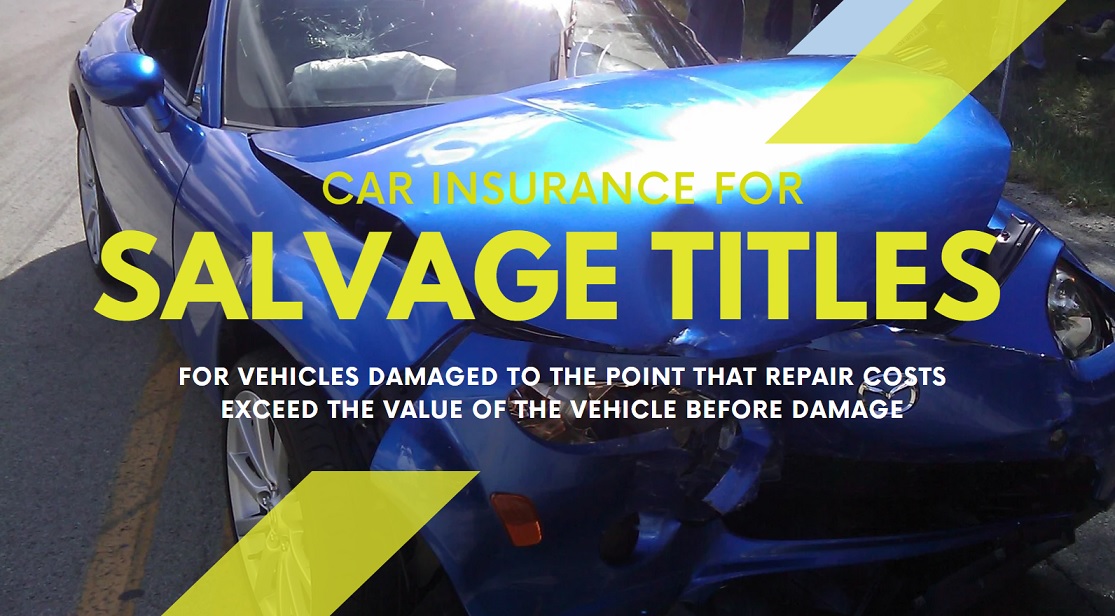
    A salvage title is issued for a vehicle that has been damaged to the point that repair costs exceed the vehicle’s pre-damage value. This usually occurs when an insurance company declares the vehicle a total loss after an accident or weather event like hail damage or flooding. The insurance company pays out the claim, takes possession of the vehicle, and applies for a salvage title. The vehicle is then sold at auction to auto recyclers or individual buyers looking for project cars.

    Vehicles are issued salvage titles to alert future owners that the car has sustained major damage. The salvage title remains with the vehicle even after repairs are made. Not all salvage title vehicles are dangerous to drive, but their complex claim history makes them more difficult to insure.

    Car Insurance for Salvage Titles

    Why Is It Hard to Get Car Insurance for Salvage Titles?

    Insurance companies are reluctant to offer full coverage on salvage title vehicles for a few reasons:

    • Higher Risk – Vehicles with salvage titles are statistically more likely to be in another accident. Parts may not be repaired properly, or hidden damage may occur. This makes the vehicles riskier to insure.
    • Difficult to Assess Damage – The insurance agents may not be able to correctly gauge the damage, repair damage, and remaining risks. This makes the vehicle’s current condition difficult to accurately evaluate.
    • Lower Value – Salvage title vehicles have a lower value than similar clean-title cars. This reduces premiums, which are based partially on a vehicle’s value. Lower premium revenue makes the cars less profitable for insurers.
    • Increased Fraud Potential – Salvage vehicles present increased potential for fraud. Individuals may try to hide the vehicle’s claim history to illegally receive higher insurance payouts.
    • State Regulations – State DMV regulations limit what coverages insurers can offer on salvage title vehicles. This prevents insurers from managing risk through restricted coverage options.

    So in summary, the combination of high risk, unknown factors, lower value, fraud potential, and strict regulations make salvage title vehicles a challenge for insurers. That means finding affordable insurance requires effort on the buyer’s part.

    Insurance Quotes for a Salvage Title Vehicle

    Here are sample insurance quotes for insuring a 2009 Toyota Camry for one year, with a salvage title in Dallas, Texas.  

    • AAA – $3,640
    • National General – $3,651
    • Safeco – $4,034
    • GEICO – $4,158  
    • Progressive $4,621
    • Nationwide – $4,723
    • Mercury – $4,903
    • State Farm – $4,986
    • The Hartford – $4,988
    • Allstate – $5,009
    • American Family – $5,042  
    • Travelers – $5,086
    • Farmers – $5,201
    • Liberty Mutual $5,287
    • *USAA – $3,424

    As you can see, annual premiums range from around $3,424 up to $5,287 for basic liability coverage. USAA offers the lowest rate, likely because they cater to military members who may be more familiar with salvage title vehicles. Mainstream companies like Allstate and Liberty Mutual have much higher rates.

    Comprehensive and collision coverage is usually not available for salvage title cars. If you can find those add-ons, expect very high premiums and high deductibles around $1,000 or more.

    Tips to Save on Salvage Title Car Insurance

    Here are some valuable tips to get the lowest insurance rate for your salvage vehicle.

    1. Compare quotes from both standard and non-standard insurers. You may find a specialty insurer like National General offers better rates.
    2. Ask about any discounts for defensive driving courses, low mileage, multi-car policies, anti-theft devices, and good student driver discounts if applicable.
    3. Increase your deductibles as high as you can afford to lower rates.
    4. Bundle your salvage auto policy with renters or homeowners insurance for multi-policy discounts.
    5. Exclude optional coverages like roadside assistance or rental reimbursement to reduce costs.
    6. Ask your insurance agent about any “limited coverage” options exclusive to salvage title cars. There may be ways to reduce certain coverages that are not advertised.
    7. Shop rates every 6 months and be ready to switch companies if you find a better deal. Loyalty rarely pays off.  
    8. Maintain a good credit score for the best pricing.
    9. Consider dropping collision and comprehensive coverage if you have a cheap vehicle valued under $3,000. The premium savings may outweigh the risk.
    10. Drive safely and maintain your salvage vehicle well. Avoid further accidents or damage, as your already-high rate will likely increase.

    Laws and Regulations on Salvage Title Vehicles 

    If you choose to insure a salvage title vehicle, be aware of the special laws and regulations:

    • State DMVs restrict the types of coverages insurers can offer on salvage cars. Liability-only policies are common.
    • Liability limits are often lower than regular policies. Minimums may be as low as $25,000 bodily injury per person.
    • Collision and comprehensive coverage is usually excluded, unavailable, or very limited on salvage cars.
    • Insurers can cancel a policy after 60 days with only 15 days’ notice if a salvage title is discovered mid-policy.
    • Premium rates for salvage title vehicles are not regulated in most states. Insurers can set arbitrarily high rates.
    • You may need to provide evidence of repairs and pass a state inspection before registration is allowed.
    • DMVs will brand the title permanently as “salvage” or “rebuilt”. This must be disclosed when re-selling.
    • Additional fees and taxes apply when initially registering a salvage title vehicle.
    • It is illegal to drive uninsured salvage title vehicles on public roads. Penalties include fines and impoundment.

    The complex regulations make it essential to find an insurer familiar with salvage title vehicle laws in your state. An experienced agent can explain your coverage and registration requirements.

    Conclusion

    Insuring a salvage title vehicle takes some effort. Finding an insurer to cover your salvage vehicle can be done, but rates are often significantly higher than non-salvage cars. The key is comparing multiple quotes, utilizing available discounts, and following your state’s salvage title regulations carefully. 

    With some diligent insurance shopping, owning a salvage car can be affordable. Just make sure you understand your insurance plan’s coverages, exclusions, and legal requirements. Get salvage car insurance quotes now. To get started, enter your zip code and fill out a free online application. Get five or more instant salvage auto insurance quotes and find your best rate.  

  • Car Insurance For Someone without a Car

    You may be wondering if you need car insurance if you don’t actually own a car. While auto insurance is mandatory for car owners, there are still reasons why someone without a vehicle may need coverage. In certain situations, car insurance for someone without a car is needed. This is typically referred to as non-owner car insurance.

    In this article we’ll go over non-owners auto insurance, including who needs it, how much it costs, what it covers, and tips for saving money. We’ll also look at sample quotes from five major insurers to give you an idea of how much non-owner auto insurance coverage costs

    Car insurance for someone without a car

    Who Needs Car Insurance Without a Car?

    Here are some examples of people who may need car insurance even if they don’t own a vehicle:

    • Occasional drivers: You may drive a family member or friend’s car occasionally. In this case, you need insurance to be covered when operating someone else’s vehicle.
    • Rideshare drivers: Drivers for Uber, Lyft, and other rideshare services often use their personal cars for work. But you’ll need coverage even if you rent a car just for ridesharing purposes.
    • Young drivers: Teenagers and young adults may want to establish a good driving record before purchasing their own car. Having insurance helps build a driving history.
    • Lower-income individuals: Those who can’t afford to buy a car right now may still need to drive every so often. Low-income car insurance might not be the perfect solution this time. However, short-term or non-owner car insurance allows for this flexibility.
    • Senior citizens: Older individuals who have given up driving may still ride as passengers with family or friends. Non-owner insurance provides coverage when riding with others.  

    How Much Does Non-Owner Car Insurance Cost?

    Car insurance rates for non-owners are usually quite reasonable compared to standard auto insurance. Full coverage costs from $400 to $900 per year on average, depending on factors like your age and driving record. Minimum liability-only policies range from $100 to $300 annually. 

    Here are estimated quotes from five top insurers for a 35-year-old female driver with a clean record getting minimum liability coverage:

    • Geico – $220 per year
    • Progressive – $235 per year  
    • State Farm – $255 per year
    • Allstate – $270 per year
    • USAA – $200 per year

    The cheapest non-owner insurer is USAA but you need to be a military member, vet, or family member of a military service member to qualify. Geico has low rates for non-owner car insurance and they provide coverage in all 50 states. 

    Exact non-owner auto insurance quotes vary based on personal factors like your age, gender, location, and driving history. But in general, non-owner car insurance costs significantly less than standard policies since you’re not insuring a specific vehicle.

    What Does Non-Owner Car Insurance Cover?

    Non-owner car insurance provides liability coverage, which protects you if you cause property damage or injuries to others while driving a borrowed or rented car. This satisfies state minimum liability requirements.

    Some non-owner policies also include:

    • Uninsured/underinsured motorist (UM/UIM) – Covers injuries if you’re hit by an at-fault driver with insufficient or no insurance. 
    • Personal injury protection (PIP) – Pays medical expenses for you and passengers after an accident, regardless of fault.
    • Comprehensive & collision – These optional coverages pay for damage to the car you’re driving. Helpful if you borrow an expensive vehicle.

    Non-owner insurance does NOT cover damage to the vehicle you’re driving. And it may not cover rental cars – supplemental rental coverage can be purchased. Read policies carefully to confirm what’s included and excluded.

    Ten Tips to get the Cheapest Car Insurance When you Don’t Own a Car 

    1. Compare quotes from at least 5 insurers – Rates can vary significantly between companies.
    2. Opt for minimum liability coverage – This provides protection at the lowest cost. Skip optional coverages to save more. 
    3. Take a defensive driving course – Completing one can make you eligible for rate discounts of up to 10%.
    4. Ask about discounts – Options like a multi-policy, paid-in-full, good student, etc. can potentially lower your premium.
    5. Raise deductibles – Choosing a higher deductible of $500 or $1,000 means you pay more out-of-pocket per claim, but your rate will decrease.
    6. Limit policy term – A 6-month policy often costs less overall than 12-month coverage. But you must renew more frequently.
    7. Maintain good credit – Insurers may use credit-based scores as a pricing factor, so keep your credit report in shape.
    8. Avoid gaps in coverage – Lapses can make you seem like a riskier customer. Maintain continuous insurance.
    9. Shop around at renewal – Don’t auto-renew. Re-compare quotes every renewal period to find any new savings. 
    10. Inquire about discounts – Ask insurers if they offer any discounts for being car-free or low-mileage. This can yield savings.

    The Bottom Line on Car Insurance Without a Car  

    A non-owner policy will protect you in the event you get into a wreck when you don’t actually own a car. Non-owner liability coverage helps comply with financial responsibility laws, provides access to rental cars, and maintains a continuous insurance history for when you do buy a car. 

    Carefully comparing insurers and policies can help you find the most affordable rate. With a little shopping around, non-owner car insurance can be affordable. To compare quotes where you live, enter your zip code. Save more money today on non-owner auto insurance. 

  • Best Car Insurance for Veterans 

    Have you served in the military and are looking for the best car insurance for veterans? Most auto insurance providers offer discounts to vets who have served in one of the military branches. Companies like USAA offer affordable coverage designated for active military members and veterans that can save drivers serious money. 

    Here’s a look at some of the best car insurance companies that offer discounted rates to veterans and tips for getting cheaper rates. 

    Best Car Insurance for Veterans

    Best Discounts and the Cheapest Insurance Quotes for Veterans

    1. USAA – 15% discount for active and former military. A sample quote for a 40-year-old married veteran in Tampa, FL driving a 2015 Toyota Camry: 

    Minimum Coverage Full Coverage
    $78/month $105/month


    2. Geico – Up to 15% off auto insurance for active and retired military members. Sample quote for a 25-year-old single veteran in Dallas, TX driving a 2019 Ford Fusion:

    Minimum Coverage Full Coverage
    $116/month $168/month


    3. American Family Insurance – Discount up to 15% for active duty and veterans. Sample quote for a 30-year-old married veteran in Phoenix, AZ driving a 2018 Honda Civic:

    Minimum Coverage Full Coverage
    $101/month $146/month


    4. State Farm – Up to 25% off for active military and veterans. Sample quote for a 27-year-old single veteran in Indianapolis, IN driving a 2020 Toyota RAV4:

    Minimum Coverage Full Coverage
    $129/month $192/month


    5. Farmers Insurance – Up to 15% discount for active and retired military. Sample quote for a 35-year-old married veteran in Los Angeles, CA driving a 2017 Nissan Altima:

    Minimum Coverage Full Coverage
    $146/month $208/month


    6. Liberty Mutual InsuranceUp to 10% off for active duty and veterans. Sample quote for a 29-year-old single veteran in Chicago, IL driving a 2016 Ford Escape: 

    Minimum Coverage Full Coverage
    $108/month $162/month


    7. Nationwide Insurance – Up to 15% off for active duty and veterans. Sample quote for a 33-year-old married veteran in Houston, TX driving a 2014 Toyota Highlander:

    Minimum Coverage Full Coverage
    $117/month $176/month


    8. Progressive Insurance – Discount for active and retired military. Sample quote for a 36-year-old married veteran in Philadelphia, PA driving a 2013 Honda Accord:

    Minimum Coverage Full Coverage
    $105/month $155/month


    9. Allstate Insurance – Up to 20% off for active military personnel. Sample quote for a 26-year-old single veteran in Phoenix, AZ driving a 2021 Jeep Wrangler: 

    Minimum Coverage Full Coverage
    $145/month $210/month


    10. Esurance – Discount for active duty and honorably discharged veterans. Sample quote for a 28-year-old single veteran in San Diego, CA driving a 2018 Toyota Tacoma:

    Minimum Coverage Full Coverage
    $121/month $178/month


    How Veterans Can Save on Car Insurance

    Beyond looking for military discounts, there are several other ways to find the best car insurance for veterans and save on car insurance premiums:

    1. Compare quotesGet quotes from multiple insurers to find the best rate. Rates can vary widely between insurers.
    2. Raise your deductible – Opting for a higher deductible of $500 or $1000 can substantially lower your premium. 
    3. Ask about discounts – Inquire about possible discounts for being claim-free, maintaining good credit, completing a defensive driving course, bundling policies, and more.
    4. Limit mileage – Let your insurer know if you drive at most 7,500 miles per year to see if you qualify for low mileage discounts. 
    5. Drop unnecessary coverage – Consider dropping collision and comprehensive coverage on older cars worth less than $3000.
    6. Maintain good credit – Having good or excellent credit can save you 10% or more on premiums in most states. Check your credit reports regularly. 
    7. Avoid budget billing – Paying your 6-month premium in full rather than going on a monthly budget plan can lead to savings. 
    8. Seek group discounts – Ask about discounts for belonging to groups like AAA, credit unions, alumni associations, etc. 
    9. Use telematics – Consider usage-based programs that track driving habits through an app or device to get discounted rates.
    10. Increase safety features – Adding safety features like airbags, antilock brakes, and anti-theft devices can lower rates.


    Conclusion 

     Multiple insurers offer great discounts to military members and veterans. Companies like USAA Insurance and Geico can save veterans hundreds yearly on auto insurance coverage. 

    It’s important to compare as many quotes as you can to see which insurer that caters to veterans has the best rates for the coverage you are looking for. It really pays off to put in the time to get quotes and find all the available discounts offered to vets. 

    Combining a military discount with other savings opportunities can help you lock in the lowest possible rate. Do your research and discuss all available discounts with an agent to get the best deal on car insurance for veterans or active military members.

  • Cheapest Car Insurance For Teachers 

    What is the best and cheapest car insurance for teachers? What insurers offer discounts for teachers? In this article, we will go over how teachers can save the most on auto insurance, while still getting good coverage that fully protects them.  

    Teachers are not the most highly paid professionals but they have one of the most important jobs in the world. The good news is there are options for teachers looking to reduce their car insurance rates, which can save them some serious money. 

    What Car Insurance Companies Offer Teachers Discounts  

    • California Casualty – They offer coverage in most states and provide low-cost discounted auto insurance coverage to educators. A big perk offers is a $0 deductible if your automobile is involved in an accident or vandalized at the school campus, including the admin offices. California Casualty Insurance also has extended coverage to anyone you give permission to drive your vehicle, in addition to rental car coverage.
    • Liberty Mutual –  Liberty Mutual loves teachers and offers discounts of up to 10% in addition to several perks. If your vehicle is vandalied on campus grounds or involved in an accident during school activities, your deductible will be $0. This can save you some big bucks. Also, you’re protected against theft or damage to any teaching materials or school property up to $2,500 per incident. 
    • Geico – Many people ask, does Geico offer discounts to teachers? The answer is Geico does not offer a specific discount to teachers. Geico does offer educators lower rates through its Affinity-Based discounts that are offered to the Military, Healthcare, and Educators. If you are a teacher, contact Geico to see if you qualify for an Affinity discount.   
    • Farmers – Like Geico, Farmers does not offer teachers a direct discount on their auto insurance but does offer an affiliation discount for certain occupations, including teachers. Contact a local Farmer’s agent today to see how much you can save. Note: discounts will vary by state.   
    • Union Plus Car Insurance – Discounted auto insurance rates to the American Federation of Teachers (AFT) are offered through SnapQuote and sold through MetLife Auto and Home Insurance. Contact a MetLife auto insurance agent for further information.
    • Plymouth Rock – One regional insurer with great teacher rates is Plymouth Rock. They not only offer discounted auto insurance rates for teachers, but grants, awards, and prizes to teachers. Contact a Plymouth Rock representative today to see how much you can save on Teacher’s auto insurance.
    • Horace Mann – There is one auto insurer that caters to educators the most and it’s Horace Mann. They have multiple discounts for teachers that can save you hundreds over competitors. Horace Mann was founded by educators and serves teachers more than any other insurer with multiple discounts. Here are just a few.

    cheapest car insurance for teachers

    Horace Mann Teacher Discounts

    According to the Horace Mann website, the average driver can save $351 by switching over. This is over 15% off a typical yearly full-coverage policy, which is a huge savings. 

    • Bundling – By bundling three or more lines with Horace Mann, you can be eligible for additional discounts. Most people already have auto, home, and life insurance, and combining all three with Horace Mann can save you hundreds. 
    • Multi-Car Discounts – If you have more than one vehicle, you can get a nice discount by bundling with Horace Mann. Talk to an agent today to see how much you can save. 
    • HMDrive – If you enroll in the HMDrive safe driving app, you can save money if you are a safe driver. Currently, the app is only available in these states: AZ, CO, CT, GA, ID, IN, LA, ME, MI, MO, MN, NH, NV, OH, OK, OR, PA, SC, SD, TN, TX, UT, VA, and WV.  
    • Automatic Payment – Current policyholders that set up automatic payments can get an additional discount. 
    • New Customer – If you’re not currently a Horace Mann policyholder and decide to switch, you can qualify for a new customer discount. Contact an agent to learn more.  

    Note: Teacher discounts are not available in all areas, and your rate will vary based on your own unique profile. To be eligible for a discount, you must be able to provide a photocopy of your teacher’s I.D. 

    What Insurer Has The Cheapest Car Insurance For Teachers?

    Below are the cheapest full-coverage auto insurance rates for teachers based on our model driver and vehicle. Rates are based on a 48-year-old teacher driving a 2010 Toyota Camry.

    • Horace Mann – $1,153
    • Nationwide – $1,162
    • USAA – $1,189 (To be eligible, teachers must be a member of the military, a veteran, or related to a family member who is) 
    • Geico – $1,196
    • MetLife Auto Insurance – $1,203 
    • Farmers – $1,210
    • Plymouth Rock – $1,251
    • Liberty Mutual – $1,268
    • California Casulty – $1,289

    In our study, Horace Mann came in with the cheapest full coverage auto insurance rates for teachers with an annual premium of just $1,153 which on only $96 a month. Although Nationwide Insurance doesn’t offer a specific discount to teachers, it came in a solid second at $1,162 a year. It’s important that you get multiple quotes, as rates vary a lot between insurers and from driver to driver.

    Compare The Best and Cheapest Car Insurance for Teachers Online

    Every driver has their own unique risk profile. This is why it’s so important to shop around for the best rates from as many providers as you can. Don’t just get a quote from the big national insurers like Farmers, but also regional providers like Plymouth Rock. If you get five or more teacher’s auto insurance quotes, you will probably reduce your current rate by 10% or more. 

    The best teacher’s auto insurance rates are almost always found online. Insurance providers offer special direct rates that you might not be able to get through an agent. Shop teacher’s auto insurance rates in five minutes or less. To get going, just enter your zip code. Save more money today on the coverage you need the most.